How Ghanaian Entrepreneurs Are Making Money with Self Loading Concrete Mixers
AIMIX Group • June 5, 2026

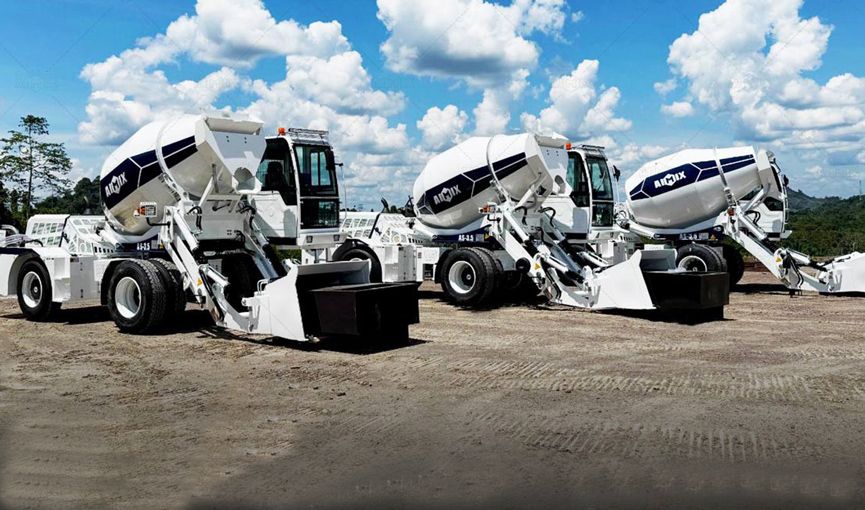
There is a quiet revolution happening on Ghana's construction sites. Forget the image of workers manually shoveling sand, gravel, and cement into a rickety drum mixer. A new machine has rolled onto the scene. It looks like a cross between a tractor and a cement truck. This is the self loading concrete mixer. In Accra, Kumasi, and even in remote towns like Takoradi, savvy entrepreneurs are buying these machines not just to use, but to rent out. They are turning a single piece of yellow steel into a steady stream of income. How exactly are they doing this? The answer lies in a perfect storm of local inefficiencies, a booming real estate sector, and a machine that does the work of five men. Let me walk you through the playbook.

The "Mobile Batching Plant" Advantage

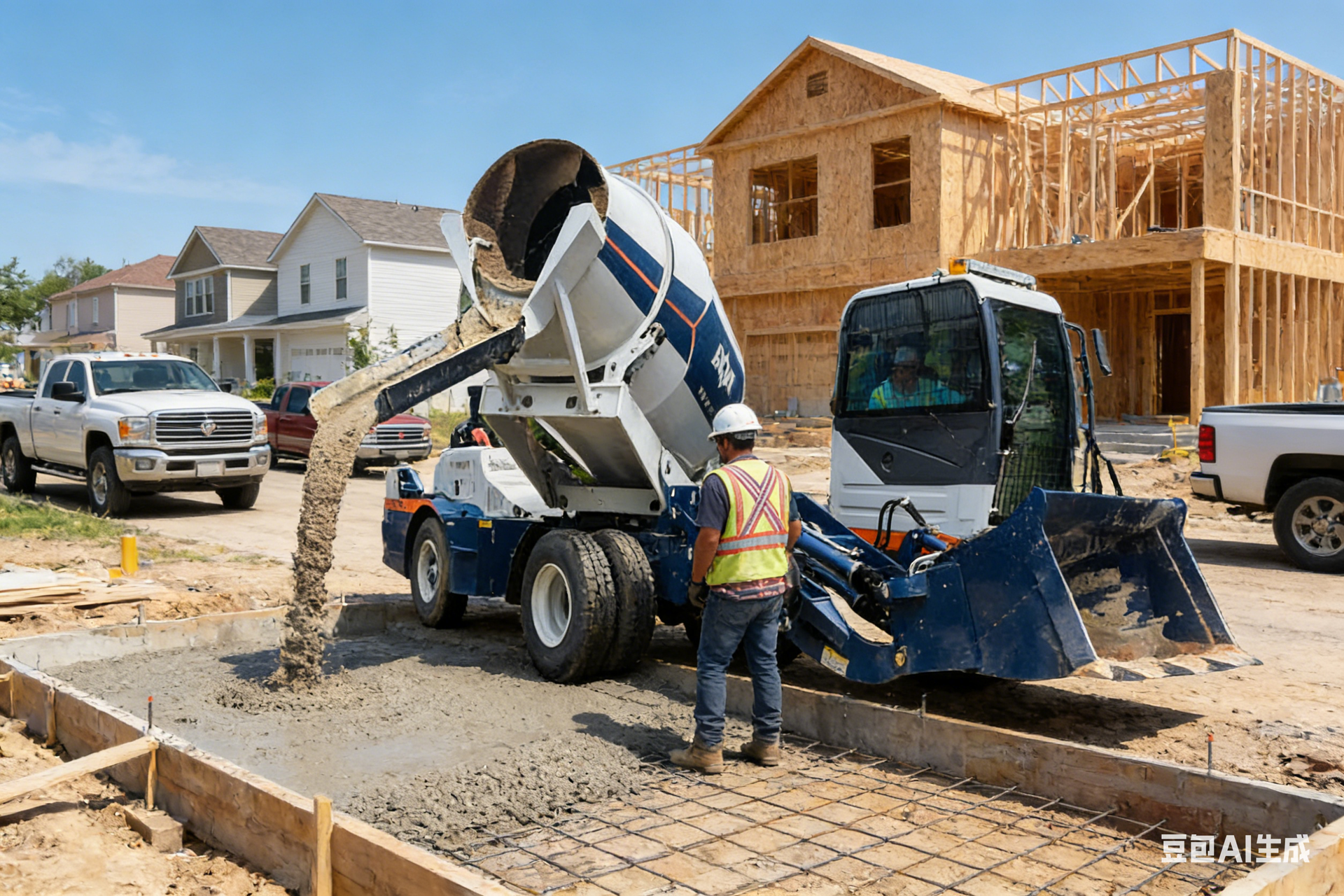
Let me paint you a picture of the old way. A small contractor needs concrete for a three-story building in a crowded Accra neighborhood. First, he buys sand, gravel, and bags of cement. Then, he hires a team of laborers to mix it on the ground with shovels. Or, he uses a small manual mixer that takes forever. The quality is iffy. The speed is slow. The labor costs add up fast. Now, here is where the entrepreneur spots the gap. He buys a self-loading mixer. This machine has a front-end loader attached to its nose. It scoops up sand and gravel directly from a stockpile. It has a scale to weigh the cement and water. It mixes everything into perfect concrete while driving to the pour site. One machine. One operator. No other helpers. For a contractor, this is magic. It saves them money on labor. It saves them time because the mixer produces concrete three times faster. And it saves them the headache of coordinating a big crew. The entrepreneur rents out the machine with an operator for a daily rate—typically between GHS 800 and GHS 1,500 per day, depending on the project. The math is simple. If the machine costs around $25,000 to $35,000, and it works 20 days a month, it can pay for itself in less than six months. After that, every single cedis is pure profit.

But wait, there is more. Unlike a standard truck mixer that needs a batching plant for sale to feed it, this machine is a batching plant. It is a turtle carrying its own shell. The entrepreneur can set up next to a pile of gravel and a pallet of cement on any vacant lot. That means he can serve customers in places where a big ready-mix truck cannot go. Think narrow alleys, hillside developments, or fenced compounds. This "go anywhere" ability is the secret sauce. Contractors pay a premium for it because they hate carrying concrete in wheelbarrows down a long dirt road. The self-loader brings the mix right to the foundation trench. That is the value proposition.

The Rental Ecosystem and Trust Factor

Now, not every entrepreneur can afford to buy a fleet of these machines. That is fine. The real money is in renting them out, not necessarily using them yourself. The playbook here is what I call the "Equipment as a Service" model. You approach small-scale developers and residential builders. You show them the machine. You let them watch a video of it working. Then, you offer a deal. You will bring the machine to their site, provide a trained operator, and even help them source the raw materials. The builder just has to pay for the concrete produced. This is a massive relief for the builder. They don't have to buy the machine, maintain it, or learn how to use it. They just pay for the output.

Building trust is the first step. Ghanaians are smart business people. They are skeptical of new tech. So, the successful entrepreneurs start small. They offer a discounted first day. They invite local foremen to watch the machine load and mix. They point out the precision of the water meter—no more guessing how wet the mix should be. Once the first foundation pour goes perfectly, word of mouth spreads faster than a wildfire in the harmattan. In the construction industry in Ghana, reputation is currency. If your machine helps a builder finish a floor slab in one day instead of three, that builder will tell everyone he knows. Suddenly, your phone is ringing off the hook. You are not selling concrete anymore. You are selling reliability and speed.

Overcoming the Challenges (Fuel, Spares, and Operator Skills)

Of course, this is not a fairy tale. There are dragons. The first dragon is fuel. These machines run on diesel. Fuel prices in Ghana have been volatile. Smart entrepreneurs bake a fuel surcharge into their rental contracts. They also teach their operators to use the "auto idle" feature. When the machine stops loading, the engine idles down to save fuel. These small habits save liters of fuel each day, which adds up to hundreds of cedis a week. The second dragon is spare parts. A broken hydraulic hose or a cracked mixing blade can shut the machine down for a week. The smart entrepreneur does not rely on the original importer alone. They build a relationship with a local hydraulic repair shop. They stock the common wear parts—belts, filters, and a set of mixing blades. Having a small inventory in a lockup garage means a breakdown that would kill another business becomes just a two-hour repair for them.

The third dragon is the operator. A self-loading concrete mixer in Ghana is not a toy. It requires a skilled hand to operate the loader arm smoothly and to reverse the drum correctly. The entrepreneur does not just hire any driver. They hire someone who has mechanic experience. Or, they pay to send a promising young person to training. They treat that operator like a partner. They give them a small bonus for every week the machine has zero downtime. Why? Because a happy, well-paid operator will take care of the machine. He will wash it out every night so concrete doesn't harden inside the drum. He will listen for strange noises from the hydraulic pump. He becomes the guardian of the investment. In the end, the entrepreneurs who succeed in Ghana are not just buying machines. They are buying into a system. A system of smart logistics, local problem-solving, and human relationships. And that system is printing money, one cubic meter of concrete at a time.


You might also like
By AIMIX Group June 12, 2026
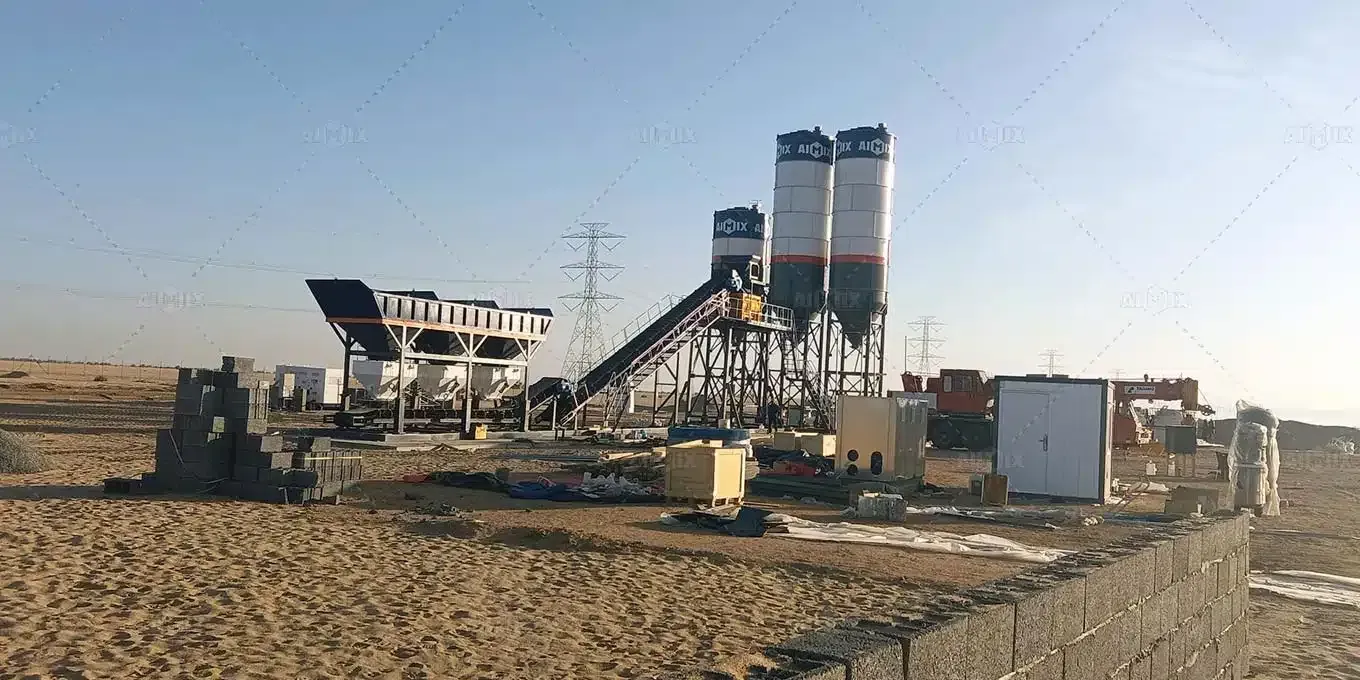
The concrete batching plant is a symphony of coordinated movements. Aggregate bins discharge, conveyor belts transfer, weigh hoppers calibrate, mixers rotate. When every component performs in sequence, production flows. But when a single element fails—a gate that doesn't close, a bearing that overheats, a belt that misaligns—the entire operation stops. Downtime at a stationary concrete batching plant costs between $500 and $5,000 per hour depending on the project's scale and penalties. Traditional maintenance approaches rely on scheduled inspections or reactive repairs after failure. Both methods accept interruptions as inevitable. A newer approach eliminates that fatalism. Smart sensors embedded throughout the plant provide continuous condition monitoring, predicting failures before they occur. This article investigates how five specific sensor technologies are transforming batching plant reliability. Vibration Monitoring on Mixer Bearings and Conveyor Drives The most common failure mode in batching plants is bearing degradation. Mixer bearings endure radial and axial loads with every rotation. Aggregate dust penetrates seals. Lubrication breaks down under heat. The bearing's raceways develop spalls—microscopic cracks that propagate into macroscopic failure. Traditional maintenance cannot detect spalls until they produce audible noise or heat. By then, the bearing is hours from seizure. Accelerometer Arrays and Spectral Analysis Smart vibration sensors use MEMS accelerometers sampling at 20 kHz or higher. Each sensor transmits velocity and acceleration data to a local gateway every few seconds. The analysis software performs Fast Fourier Transform (FFT) on the vibration signal, converting time-domain data into frequency spectra. Healthy bearings produce specific harmonic frequencies based on ball pass frequency (BPF) calculations. When spalls develop, sidebands appear around these harmonics. The system flags increasing sideband amplitudes as early warning indicators. One German ready-mix operator installed accelerometers on eight mixer bearings after experiencing three catastrophic failures in six months. Within two weeks, the system flagged bearing number four with 85% confidence of inner race spalling. Maintenance scheduled a replacement during a planned weekend shutdown. The disassembled bearing showed a 12-millimeter spall that would have caused seizure within forty operational hours. The sensor investment of $4,200 prevented a $47,000 failure including replacement parts, emergency labor, and lost production. Envelope Detection for Low-Speed Applications Conveyor drive bearings rotate slowly—often below 100 RPM. Standard vibration analysis struggles at these speeds because impact energy dissipates rapidly. Smart sensor systems employ envelope detection (also called demodulation), a signal processing technique that extracts high-frequency resonances excited by bearing impacts. The filtered signal reveals repetitive impulses even at sub-10 RPM speeds. This capability is critical for screw conveyor supports and tail pulley bearings, both common failure points in aggregate handling systems. Gate Position Feedback and Hopper Level Sensing Partial gate openings produce erratic batching cycles. A cement gate that closes 90% instead of 100% allows material to trickle into the weigh hopper after batching completes. The operator either accepts inaccurate weights or initiates a time-consuming purge cycle. Traditional limit switches only confirm full closure—they cannot detect partial closure or jamming caused by foreign objects. Smart sensors solve this limitation. Inductive Proximity Sensors with Analog Output Standard inductive sensors provide binary output: target present or absent. Smart analog inductive sensors measure the distance to the gate plate continuously, reporting values from 0 to 10 volts or 4 to 20 milliamps. The control system monitors this analog signal during gate operation. A gate that reaches full closure in 1.2 seconds normally but takes 3.5 seconds indicates debris accumulation on the gate plate or a worn actuating linkage. The system alerts maintenance before the gate fails completely. Sensor cost per gate runs $150 to $300—negligible compared to a half-day of downtime. Guided Wave Radar for Bin Level Measurement Aggregate bins and cement silos require accurate level measurement to prevent overfills (which damage bin tops) and underfills (which starve the batching cycle). Traditional ultrasonic sensors fail in dusty environments, returning erratic readings. Guided wave radar (GWR) sensors transmit a low-energy electromagnetic pulse along a steel cable or rod extending into the bin. The pulse reflects from the material surface, and the sensor calculates distance based on time-of-flight. Dust, temperature variations, and material density changes do not affect GWR accuracy. A Spanish precast plant experienced repeated cement silo overfills because their ultrasonic sensors reported false low levels during filling. Each overfill required eight hours of manual cleaning and cost €12,000 in lost material and labor. Replacement with GWR sensors eliminated all overfill incidents over 18 months of operation. The payback period was three weeks. Current Monitoring for Motor Health and Jog Detection Electric motors drive every moving component in a stationary batching plant . A motor drawing excessive current indicates mechanical binding or impending failure. A motor drawing insufficient current suggests belt slip or coupling wear. Traditional ammeters require operator observation—a task easily missed during busy production shifts. Smart current monitoring automates the observation. Three-Phase Current Transformers with Edge Processing Smart current monitoring uses three current transformers (CTs) clamped around each motor's supply cables. The connected edge device samples current at 1 kHz, calculating RMS values for each phase while also performing harmonic analysis. The system learns baseline current profiles during normal operation—a 45 kW mixer motor drawing 78 amps during loaded mixing, 22 amps during empty rotation. When current deviates beyond programmed thresholds (typically ±15% of baseline), the system generates alerts with severity ratings. Harmonic analysis reveals additional failure modes. A motor developing rotor bar cracks produces sidebands around the 50 Hz fundamental frequency at specific slip-related intervals. The edge device detects these sidebands using digital signal processing algorithms, identifying rotor faults weeks before they cause motor failure. One US contractor reported saving $180,000 annually by replacing motors on scheduled outages rather than after catastrophic winding failures. Jog Detection for Conveyor Belting Conveyor belts experience "jogging"—brief interruptions in motion caused by material buildup on return rollers or seized idler bearings. Jogging produces characteristic current spikes as the belt tension increases, slips, then re-engages. Operators rarely notice intermittent jogging, but the cumulative effect accelerates belt wear and splice degradation. Smart current monitors detect jogging events by analyzing the current waveform's derivative. A sudden current drop followed by rapid recovery indicates belt slip. The system logs each event with timestamp and duration. Maintenance receives a weekly report showing jogging frequency per conveyor, enabling targeted roller inspection and cleaning. Water Flow and Admixture Meter Verification Water meters and admixture flow sensors drift over time. Mechanical turbine meters accumulate wear on their bearings, causing under-registration. The operator unknowingly adds excess water to achieve target slump, compromising strength. Smart verification systems compare flow meter readings against secondary measurement methods. Coriolis Mass Flow Meters Traditional water meters measure volumetric flow. Coriolis meters measure mass flow directly by sensing the Coriolis force exerted on vibrating tubes. The meter provides simultaneous mass flow, density, and temperature readings. For batching plant applications, the density measurement confirms that the fluid is water (density 1,000 kg/m³) rather than entrained air (which would indicate cavitation) or contamination. The smart system compares the Coriolis reading against the primary meter. Deviation exceeding 2% triggers a recalibration alert. A Belgian batching plant discovered that their primary water meter was under-registering by 8% after five years of service. The Coriolis verification system flagged the deviation during a routine midnight self-check. Recalibration restored accurate water dosing, reducing cement consumption by 6% (since excess water required additional cement to maintain strength). The annual savings in cement alone exceeded €45,000. Ultrasonic Clamp-On Flow Verification Admixture lines carry aggressive chemicals that corrode traditional flow meters. Ultrasonic clamp-on meters attach to the outside of the pipe, using transit-time differences to calculate flow without contacting the fluid. The smart system activates the ultrasonic check periodically during plant idle time, comparing its reading to the primary admixture meter. Discrepancies trigger alerts before production batches are affected. This non-invasive verification extends meter life and reduces maintenance exposure to hazardous chemicals. Data Integration and Predictive Algorithms Individual sensors generate alerts. Integrated sensor networks enable prediction. Modern concrete batching plants for sale deploy edge gateways that collect data from all sensors and transmit it to cloud-based analytics platforms. Machine learning models trained on historical failure patterns identify combinations of sensor readings that precede failures. For example, increased vibration on a screw conveyor bearing plus elevated current on the drive motor plus below-normal aggregate flow from that bin indicates a specific failure mode: material bridging in the bin causing intermittent loading. The prediction algorithm issues a maintenance recommendation with 92% confidence and an estimated 48-hour window before critical failure. Economic Impact of Predictive Integration A 2023 study of 45 batching plants across Europe and North America compared plants with smart sensor integration against those without. Integrated plants experienced 72% fewer unplanned stoppages. Their mean time between failures (MTBF) increased from 187 hours to 623 hours. Annual maintenance costs dropped by 41% as emergency repairs (which carry 3x higher labor costs than scheduled repairs) nearly disappeared. The average return on investment for smart sensor retrofits was 11 months. For new plants, the incremental cost of specifying smart sensors at manufacture is typically recovered within the first six months of operation. Implementation Roadmap for Existing Plants Retrofitting an existing plant requires a phased approach. Phase one targets critical rotating equipment: mixer bearings, conveyor drives, and elevator head pulleys. Phase two adds gate position feedback and bin level sensing. Phase three implements current monitoring on all motors above 15 kW. Phase four integrates water and admixture verification. Each phase delivers immediate value while building toward full predictive capability. Early adopters report that phase one alone reduces downtime by 40-50%, providing the confidence and funding for subsequent phases. The technology is proven. The economics are compelling. The question is no longer whether to adopt smart sensors, but when.
By AIMIX Group June 10, 2026
Dubai's construction sites are not forgiving environments. Temperatures exceed 45 degrees Celsius for five months of the year. The air carries suspended silica dust from nearby desert terrain. Under these conditions, self loading concrete mixer fail differently than they do in temperate climates. The problems are rarely catastrophic. No single bearing explodes. No hydraulic line bursts dramatically. Instead, performance degrades incrementally. The engine runs hotter each week. The hydraulic oil darkens prematurely. The drum rotation slows. Experienced fleet managers in the Emirate have learned that survival depends not on major components but on small construction details—dust sealing, cooling fin density, and thermal management of auxiliary systems. This investigation examines those details and explains why they determine whether a mixer lasts five years or five months in Dubai. The Dust Intrusion Problem Silica dust measures between 1 and 100 microns. For context, a human hair is 70 microns thick. These particles float through the air and settle on every horizontal surface. When a self loading mixer operates, its engine cooling fan pulls air through the radiator. That same fan pulls dust toward the engine bay. Without proper sealing, the dust infiltrates electrical connectors, alternator windings, and hydraulic tank breathers. The results are predictable: intermittent electrical faults, charging system failures, and hydraulic fluid contamination. Breather Filtration Specifications The hydraulic tank requires atmospheric venting. As oil heats and cools, air moves in and out of the tank. Standard breather caps use a simple mesh filter, adequate for European construction sites but insufficient for Dubai. The mesh stops particles above 40 microns. Desert dust passes through freely. Once inside the tank, dust mixes with hydraulic oil, forming an abrasive slurry that wears pump pistons and valve spools. The professional specification for Dubai calls for a breather with a 3-micron absolute filter element and a built-in pressure relief valve. This component costs $45 instead of $12. The difference is the lifespan of the entire hydraulic system. Some manufacturers install the superior breather by default on units destined for the Middle East. Others do not. Buyers must verify the breather specification before accepting delivery. One contractor in Dubai's Al Quoz industrial area recently rejected three new mixers because the supplier had installed standard breathers despite promising otherwise. The supplier replaced them at their own cost—a $2,000 concession that prevented an estimated $30,000 in future hydraulic repairs. Electrical Enclosure Sealing The control panel houses the PLC, relays, and terminal blocks. Dust inside this enclosure causes intermittent connections. A relay with dust-contacted pins may fail to close, stopping the entire mixing cycle. The operator resets the system. The cycle repeats. Productive time disappears. The solution is an enclosure rated IP66—dust-tight and protected against powerful water jets. Many mixers ship with IP54 enclosures, which resist dust ingress but do not prevent it entirely. In Dubai's conditions, IP54 enclosures require internal cleaning every 200 operating hours. IP66 enclosures require cleaning never. Beyond the enclosure rating, the cabinet must maintain positive pressure. A small filtered fan pushes clean air into the enclosure, preventing dust from entering through cable entry points. This feature adds $300 to the machine cost. Contractors who skip it pay that $300 every three months in technician labor to clean control panels. One Dubai-based fleet operator documented an average of eight hours per month per machine spent troubleshooting dust-related electrical faults before retrofitting pressurized enclosures. After the retrofit, faults dropped to near zero. Cooling Fin Density and Thermal Management Heat is the second enemy. Every component generates heat. The engine, the hydraulic pump, the drum drive motor, and the alternator all reject thermal energy into the engine bay. If that energy cannot escape, component temperatures rise. Hydraulic oil above 80 degrees Celsius loses viscosity and lubricity. Engine coolant above 105 degrees causes head gasket failure. The cooling system must be oversized for Dubai's ambient temperatures. Radiator Core Specifications Standard radiators have fin densities of 12 to 14 fins per inch. This density provides adequate cooling in temperate climates but clogs rapidly with dust in Dubai. The dust bridges between fins, creating an insulating blanket that blocks airflow. A radiator with 8 to 10 fins per inch offers less surface area for dust accumulation and tolerates longer intervals between cleaning. The tradeoff is reduced cooling capacity at the same core size. To compensate, Dubai-spec machines use deeper cores—four rows of tubes instead of three—and larger cooling fans that move more air at lower speeds. Manufacturers who supply the Middle East market regularly offer these "desert cooling" packages. The cost premium is typically $1,500 to $3,000. Buyers who decline this premium to save money often regret the decision within the first summer. One contractor purchased six concrete mixers Dubai without the desert cooling package, believing regular cleaning would suffice. During July, each machine required radiator cleaning every three days. The labor cost exceeded the upfront premium within eight weeks. Hydraulic Oil Cooler Placement The hydraulic oil cooler should never sit directly behind the radiator. This common configuration forces air heated by the radiator (now at 60-70 degrees Celsius) through the oil cooler, providing minimal temperature reduction. The correct configuration places the oil cooler in parallel with the radiator or mounts it separately with its own electric fan. The parallel arrangement adds manufacturing complexity and cost—approximately $800 per machine—but reduces hydraulic oil temperatures by 15 to 20 degrees compared to the series arrangement. Lower oil temperatures extend pump life from 4,000 hours to 8,000 hours. Field measurements from a Dubai precast yard illustrate the difference. Machines with series coolers showed hydraulic oil temperatures averaging 88 degrees Celsius during summer operation. Machines with parallel coolers averaged 71 degrees. The cooler-running machines required no hydraulic component replacements over 6,000 operating hours. The series-cooler machines experienced three pump failures and two valve block replacements over the same period. The repair costs exceeded $25,000 per machine. Air Intake Filtration Redundancy The engine requires clean air for combustion. A single-stage air filter stops particles down to 5 microns. In Dubai's dust events, this filter clogs within 40 hours. The engine then starves for air, losing power and increasing fuel consumption. Dual-stage filtration solves this problem. A cyclonic pre-cleaner spins incoming air, throwing heavy dust particles outward into a collection cup. Only pre-cleaned air reaches the main filter element. The pre-cleaner extends main filter life to 250 hours or more. Pre-Cleaner Sizing and Maintenance Not all pre-cleaners perform equally. The collection cup must be transparent or have a sight glass to allow visual inspection. Some manufacturers install opaque cups, requiring the operator to remove the cup for inspection—a task that gets deferred until the main filter clogs. Transparent cups cost $15 more. Operators can see the dust level at a glance and empty the cup when it reaches one-third full. This simple detail prevents 90% of filter clogging events. The pre-cleaner must also include a dust evacuation valve. This rubber diaphragm opens under vacuum, ejecting accumulated dust automatically. Without this valve, the operator must empty the cup manually every shift—a task that is often forgotten. The combination of transparent cup and evacuation valve creates a self-maintaining system that requires attention only every 100 operating hours. Machines lacking these features demand daily operator intervention. In Dubai's labor environment, daily intervention means daily neglect. Engine Breather Rerouting The engine crankcase breather vents gases from inside the engine. In standard configuration, these gases exit near the engine block, drawing dusty air into the breather tube through convection. The ingested dust accelerates ring and cylinder wear. The solution reroutes the breather to the air intake pre-cleaner. The engine then draws filtered air through the breather, not dusty engine bay air. This modification costs $50 in hoses and fittings. The return on investment is an additional 3,000 hours of engine life before the first overhaul. Contractors who understand this detail specify it in their purchase orders. Those who do not discover it during post-failure teardowns. The Verdict on Small Details Self loading mini concrete mixers running in Dubai survive or fail based on small construction details. The breather filter, the enclosure rating, the radiator fin density, the oil cooler placement, and the air intake configuration collectively determine machine lifespan. These details add $3,000 to $8,000 to the purchase price of a $70,000 to $120,000 machine. Buyers who approve these additions receive equipment that operates reliably through five Dubai summers. Buyers who delete them to save upfront capital receive equipment that spends its first summer in the repair bay. The choice is clear. The details are not optional. They are the difference between a tool and a liability.
By AIMIX Group June 7, 2026
The mini concrete pump market has exploded in recent years. Chinese manufacturers now dominate the global supply, offering machines at prices that European brands cannot match. Yet contractors remain wary. A $12,000 pump that fails after two weeks costs more than a $20,000 pump that runs for five years. The concrete pump price tag, in isolation, reveals almost nothing about the machine's true value. Conversations with a dozen contractors across the United States, Australia, and the United Kingdom reveal a consistent set of anxieties. These buyers are not simply looking for the lowest number. They are trying to avoid catastrophic downtime, unplanned repair bills, and the frustration of dealing with distant suppliers who vanish after the sale. This article investigates the specific worries that drive mini concrete pump purchasing decisions—and how savvy buyers address them. 1. The Fear of Hydraulic Component Failure The hydraulic system is the heart of a concrete pump. It converts diesel or electric power into the pressure that pushes concrete through the delivery line. When the hydraulic pump fails, the machine stops completely. Replacement pumps from premium brands cost $1,500 to $3,000. Labor adds another $500 to $1,000. A buyer who saves $3,000 on the initial purchase price by accepting an unbranded hydraulic pump risks spending that entire saving on a single repair. 1.1 Brand Transparency and Counterfeit Risks Reputable mini pump manufacturers specify the brand of every hydraulic component. A typical specification sheet lists the main pump brand (Rexroth, Kawasaki, or Sunfab), the gear pump brand (Marzocchi or Casappa), and the valve brand (Hydraforce or Sun Hydraulics). Lower-priced competitors omit these details, describing components simply as "imported" or "high-quality." Buyers worry that these vague descriptions hide either counterfeit parts or unbranded Chinese components with unknown reliability. One Australian contractor shared his experience. He purchased twelve mini concrete pumps from a Guangzhou-based supplier, attracted by a price $4,000 below the nearest competitor. The hydraulic pumps failed on eight units within the first 500 operating hours. When he disassembled the failed pumps, he found castings with rough internal passages that restricted oil flow. The supplier had used recycled aluminum for the pump housing, which flexed under pressure and allowed internal leakage. The contractor spent $18,000 replacing pumps and lost another $40,000 in rental revenue while the machines sat idle. The initial saving evaporated completely. 1.2 Cooling Capacity and Overheating Risk Mini concrete pumps operate in hot environments. Ambient temperatures above 35°C are common in summer. The hydraulic oil temperature must stay below 80°C to maintain viscosity and prevent seal degradation. Buyers worry that cheaper pumps compromise on oil cooler size. A correctly sized cooler has a large finned surface area and a thermostatically controlled fan. Undersized coolers allow oil temperature to climb past 95°C, at which point the oil oxidizes, turns black, and loses its lubricating properties. Premature pump wear follows within weeks. The professional buyer measures the oil cooler's surface area and compares it against the pump's hydraulic horsepower. A mini pump with 30 kW of hydraulic power requires a cooler with at least 0.8 square meters of fin area. Suppliers who cannot provide this specification are likely using coolers salvaged from smaller machines. One English buyer discovered that his "bargain" pump used a cooler meant for a 15 kW system. The machine overheated after forty-five minutes of continuous operation, limiting him to short pours. He eventually added an external cooler at his own expense, adding $800 to his total cost. 2. The Worry About Wear Part Longevity Concrete contains sand and aggregate. These materials are abrasive. Every time the pump cycles, the concrete wears against the inside of the cylinders, the hopper, and the S-valve. Wear parts are consumables. They require replacement at regular intervals. Buyers worry that cheaper pumps use softer materials that wear faster, increasing the long-term cost of ownership. 2.1 Cylinder Liner Material and Hardness The pump cylinders contain the concrete under pressure. The piston pushes the concrete forward, and the abrasive particles scrape against the cylinder wall. Premium pumps use cylinders with induction-hardened liners. The hardening process creates a surface layer with a hardness of 60-65 HRC (Rockwell C scale), which resists abrasion for thousands of hours. Cheaper pumps use through-hardened or case-hardened cylinders with surface hardness below 50 HRC. These cylinders wear rapidly, developing grooves that allow concrete to bypass the piston. The result is reduced output pressure and eventual pump failure. Buyers worry that the cylinder specification is often omitted from price quotes. One Florida contractor purchased five mini pumps based on price alone, only to find that the cylinders wore out after 300 hours. Replacement cylinders cost $600 each, and the contractor needed to replace them every four months. After two years, he had spent more on cylinders than he had saved on the purchase price. His advice to other buyers: "Ask for the cylinder hardness certificate. If they can't provide it, walk away." 2.2 S-Valve Material and Replacement Cost The S-valve directs concrete from the hopper to the delivery line. It is the most complex wear part in the pump. Premium pumps use S-valves cast from high-chrome white iron with a hardness of 58-62 HRC. These valves last 2,000 to 3,000 hours in normal service. Cheaper pumps use valves made from ductile iron or even mild steel. These materials wear quickly, sometimes lasting only 500 hours. Replacement S-valves from premium brands cost $400 to $700. Cheap pumps often use proprietary valve designs, forcing the buyer to purchase replacements from the original supplier at inflated prices. One buyer in Texas learned this lesson painfully. His $11,000 mini pump needed an S-valve replacement at 400 hours. The original supplier quoted $850 for the part plus $200 for shipping from China. The valve took six weeks to arrive. During that time, the machine sat idle. The contractor lost $6,000 in rental income. He later discovered that the valve was a non-standard size, so no aftermarket alternative existed. He sold the pump at a loss and bought a brand with standard, locally available wear parts. 3. The Anxiety About After-Sales Support The pump arrives on a pallet. It looks shiny and new. But what happens when something breaks? Buyers worry that the supplier who was responsive during the sales process will disappear after the payment clears. This is not paranoia. It is a pattern documented across the industry. Many small Chinese exporters have no presence in the buyer's country. They offer email support only, with no phone number and no physical address. 3.1 Parts Availability and Lead Times Even a reliable pump will eventually need parts. Hydraulic hoses crack. Seals leak. Pressure switches fail. Buyers worry about how long it will take to receive replacement parts. A supplier with a local warehouse can ship parts for next-day delivery. A supplier shipping from China requires four to six weeks for sea freight or $200 for air freight. The buyer who saves $2,000 on the purchase price may spend $1,000 on air freight for urgent parts and lose weeks of production waiting for sea freight. A contractor in New Zealand shared his calculation. He compared two similar small concrete pumps sale . One cost $14,000 from a local distributor who stocked parts. The other cost $10,500 from a direct Chinese supplier. He calculated the expected parts cost over three years, including freight. The Chinese pump came out $1,200 cheaper on parts, but he factored in the risk of machine downtime costing $500 per day. Even a single week of downtime erased the saving. He chose the local distributor and never regretted the decision. 3.2 Technical Documentation and Troubleshooting When a pump fails, the buyer needs to diagnose the problem. A wiring diagram and hydraulic schematic are essential. Premium suppliers provide these documents as standard. Cheap suppliers often provide nothing, or provide generic diagrams that do not match the actual machine. Buyers worry about being left alone with a broken pump and no way to understand how it works. One Canadian buyer documented his experience. His mini pump developed an electrical fault. The supplier provided a wiring diagram that showed components his machine did not have. He spent two weeks tracing wires and testing circuits, ultimately finding a corroded connector hidden behind the control panel. A proper diagram would have shown him the connector location immediately. He later learned that the supplier had used the same generic diagram for five different pump models. He wrote off the pump as a loss and bought a more expensive unit from a manufacturer who provided accurate documentation. Conclusion: The Real Price Is Total Cost of Ownership The mini concrete pump price that appears on a quote is a starting point, not an ending point. Buyers who focus only on that number miss the larger picture. The hydraulic pump brand, the cylinder hardness, the S-valve material, the parts availability, and the quality of technical documentation all affect the machine's real cost over time. A $12,000 pump with poor components and no support can cost $20,000 in repairs and lost revenue within two years. A $16,000 pump with premium components and local support can cost $17,000 over the same period. The lower initial price is an illusion. Professional buyers look past the illusion and calculate the total cost of ownership before they sign the purchase order.

Book a Service Today