Dust and Cooling Fins: The Small Construction Details That Keep Self Loading Mixers Running in Dubai
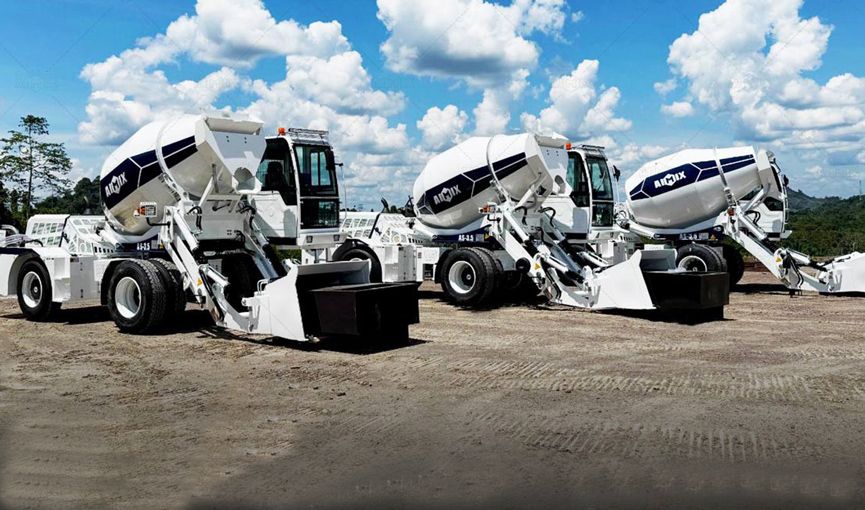
Dubai's construction sites are not forgiving environments. Temperatures exceed 45 degrees Celsius for five months of the year. The air carries suspended silica dust from nearby desert terrain. Under these conditions, self loading concrete mixer fail differently than they do in temperate climates. The problems are rarely catastrophic. No single bearing explodes. No hydraulic line bursts dramatically. Instead, performance degrades incrementally. The engine runs hotter each week. The hydraulic oil darkens prematurely. The drum rotation slows. Experienced fleet managers in the Emirate have learned that survival depends not on major components but on small construction details—dust sealing, cooling fin density, and thermal management of auxiliary systems. This investigation examines those details and explains why they determine whether a mixer lasts five years or five months in Dubai.
The Dust Intrusion Problem
Silica dust measures between 1 and 100 microns. For context, a human hair is 70 microns thick. These particles float through the air and settle on every horizontal surface. When a self loading mixer operates, its engine cooling fan pulls air through the radiator. That same fan pulls dust toward the engine bay. Without proper sealing, the dust infiltrates electrical connectors, alternator windings, and hydraulic tank breathers. The results are predictable: intermittent electrical faults, charging system failures, and hydraulic fluid contamination.
Breather Filtration Specifications
The hydraulic tank requires atmospheric venting. As oil heats and cools, air moves in and out of the tank. Standard breather caps use a simple mesh filter, adequate for European construction sites but insufficient for Dubai. The mesh stops particles above 40 microns. Desert dust passes through freely. Once inside the tank, dust mixes with hydraulic oil, forming an abrasive slurry that wears pump pistons and valve spools. The professional specification for Dubai calls for a breather with a 3-micron absolute filter element and a built-in pressure relief valve. This component costs $45 instead of $12. The difference is the lifespan of the entire hydraulic system.
Some manufacturers install the superior breather by default on units destined for the Middle East. Others do not. Buyers must verify the breather specification before accepting delivery. One contractor in Dubai's Al Quoz industrial area recently rejected three new mixers because the supplier had installed standard breathers despite promising otherwise. The supplier replaced them at their own cost—a $2,000 concession that prevented an estimated $30,000 in future hydraulic repairs.
Electrical Enclosure Sealing
The control panel houses the PLC, relays, and terminal blocks. Dust inside this enclosure causes intermittent connections. A relay with dust-contacted pins may fail to close, stopping the entire mixing cycle. The operator resets the system. The cycle repeats. Productive time disappears. The solution is an enclosure rated IP66—dust-tight and protected against powerful water jets. Many mixers ship with IP54 enclosures, which resist dust ingress but do not prevent it entirely. In Dubai's conditions, IP54 enclosures require internal cleaning every 200 operating hours. IP66 enclosures require cleaning never.
Beyond the enclosure rating, the cabinet must maintain positive pressure. A small filtered fan pushes clean air into the enclosure, preventing dust from entering through cable entry points. This feature adds $300 to the machine cost. Contractors who skip it pay that $300 every three months in technician labor to clean control panels. One Dubai-based fleet operator documented an average of eight hours per month per machine spent troubleshooting dust-related electrical faults before retrofitting pressurized enclosures. After the retrofit, faults dropped to near zero.
Cooling Fin Density and Thermal Management
Heat is the second enemy. Every component generates heat. The engine, the hydraulic pump, the drum drive motor, and the alternator all reject thermal energy into the engine bay. If that energy cannot escape, component temperatures rise. Hydraulic oil above 80 degrees Celsius loses viscosity and lubricity. Engine coolant above 105 degrees causes head gasket failure. The cooling system must be oversized for Dubai's ambient temperatures.
Radiator Core Specifications
Standard radiators have fin densities of 12 to 14 fins per inch. This density provides adequate cooling in temperate climates but clogs rapidly with dust in Dubai. The dust bridges between fins, creating an insulating blanket that blocks airflow. A radiator with 8 to 10 fins per inch offers less surface area for dust accumulation and tolerates longer intervals between cleaning. The tradeoff is reduced cooling capacity at the same core size. To compensate, Dubai-spec machines use deeper cores—four rows of tubes instead of three—and larger cooling fans that move more air at lower speeds.
Manufacturers who supply the Middle East market regularly offer these "desert cooling" packages. The cost premium is typically $1,500 to $3,000. Buyers who decline this premium to save money often regret the decision within the first summer. One contractor purchased six concrete mixers Dubai without the desert cooling package, believing regular cleaning would suffice. During July, each machine required radiator cleaning every three days. The labor cost exceeded the upfront premium within eight weeks.
Hydraulic Oil Cooler Placement
The hydraulic oil cooler should never sit directly behind the radiator. This common configuration forces air heated by the radiator (now at 60-70 degrees Celsius) through the oil cooler, providing minimal temperature reduction. The correct configuration places the oil cooler in parallel with the radiator or mounts it separately with its own electric fan. The parallel arrangement adds manufacturing complexity and cost—approximately $800 per machine—but reduces hydraulic oil temperatures by 15 to 20 degrees compared to the series arrangement. Lower oil temperatures extend pump life from 4,000 hours to 8,000 hours.
Field measurements from a Dubai precast yard illustrate the difference. Machines with series coolers showed hydraulic oil temperatures averaging 88 degrees Celsius during summer operation. Machines with parallel coolers averaged 71 degrees. The cooler-running machines required no hydraulic component replacements over 6,000 operating hours. The series-cooler machines experienced three pump failures and two valve block replacements over the same period. The repair costs exceeded $25,000 per machine.
Air Intake Filtration Redundancy
The engine requires clean air for combustion. A single-stage air filter stops particles down to 5 microns. In Dubai's dust events, this filter clogs within 40 hours. The engine then starves for air, losing power and increasing fuel consumption. Dual-stage filtration solves this problem. A cyclonic pre-cleaner spins incoming air, throwing heavy dust particles outward into a collection cup. Only pre-cleaned air reaches the main filter element. The pre-cleaner extends main filter life to 250 hours or more.
Pre-Cleaner Sizing and Maintenance
Not all pre-cleaners perform equally. The collection cup must be transparent or have a sight glass to allow visual inspection. Some manufacturers install opaque cups, requiring the operator to remove the cup for inspection—a task that gets deferred until the main filter clogs. Transparent cups cost $15 more. Operators can see the dust level at a glance and empty the cup when it reaches one-third full. This simple detail prevents 90% of filter clogging events.
The pre-cleaner must also include a dust evacuation valve. This rubber diaphragm opens under vacuum, ejecting accumulated dust automatically. Without this valve, the operator must empty the cup manually every shift—a task that is often forgotten. The combination of transparent cup and evacuation valve creates a self-maintaining system that requires attention only every 100 operating hours. Machines lacking these features demand daily operator intervention. In Dubai's labor environment, daily intervention means daily neglect.
Engine Breather Rerouting
The engine crankcase breather vents gases from inside the engine. In standard configuration, these gases exit near the engine block, drawing dusty air into the breather tube through convection. The ingested dust accelerates ring and cylinder wear. The solution reroutes the breather to the air intake pre-cleaner. The engine then draws filtered air through the breather, not dusty engine bay air. This modification costs $50 in hoses and fittings. The return on investment is an additional 3,000 hours of engine life before the first overhaul. Contractors who understand this detail specify it in their purchase orders. Those who do not discover it during post-failure teardowns.
The Verdict on Small Details
Self loading mini concrete mixers running in Dubai survive or fail based on small construction details. The breather filter, the enclosure rating, the radiator fin density, the oil cooler placement, and the air intake configuration collectively determine machine lifespan. These details add $3,000 to $8,000 to the purchase price of a $70,000 to $120,000 machine. Buyers who approve these additions receive equipment that operates reliably through five Dubai summers. Buyers who delete them to save upfront capital receive equipment that spends its first summer in the repair bay. The choice is clear. The details are not optional. They are the difference between a tool and a liability.
You might also like