Dirty Inside Pipes Lead to Real Problems: Cleaning Logic for Concrete Mixer Pumps
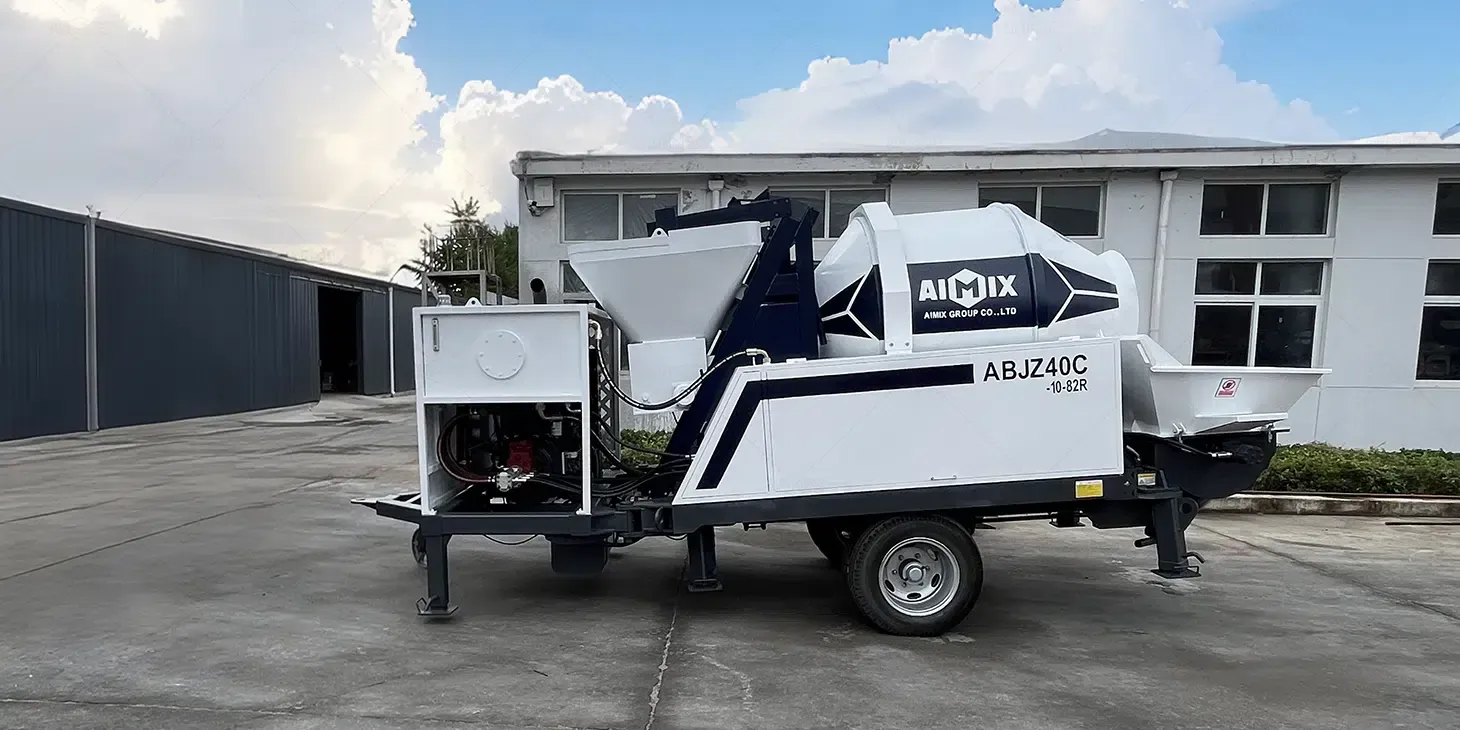
The concrete pump is a marvel of hydraulic engineering. It pushes viscous, abrasive slurry through steel pipes, around corners, and up vertical rises. But every concrete pump with mixer for sale has an Achilles heel: what remains inside when the pour stops. Residual concrete hardens into an immovable plug. That plug increases resistance. The pump works harder. Hydraulic pressures spike. Hoses bulge. Eventually, something gives—a pipe joint separates, a hose bursts, or the pump’s S-valve seizes. These failures are not mechanical defects. They are cleaning failures. This investigation examines the physics of concrete residue, the consequences of inadequate cleaning, and the procedural logic that keeps pipelines clear.
The Adhesion Mechanism: Why Concrete Sticks
Concrete does not simply dry inside pipes. It hydrates. Cement particles react with water to form calcium silicate hydrate (C-S-H) gel. This gel bonds to steel surfaces at a molecular level. Within two hours, the bond strength exceeds 0.5 megapascals—enough to resist normal water flow. After four hours, removal requires mechanical scraping or high-pressure jetting. After twenty-four hours, the concrete achieves full strength, effectively welding itself to the pipe wall.
The adhesion rate accelerates with temperature. At 30°C, the C-S-H gel forms twice as fast as at 20°C. Many pump operators fail to adjust their cleaning schedules for summer conditions. A cleaning interval that works in mild weather becomes inadequate on a hot afternoon. The result is incremental buildup. Each pour leaves a thin layer. Over weeks, the pipe’s effective diameter shrinks. The pump’s output drops. The operator blames the machine. The machine is innocent.
1.1 The Pressure Spike Cascade
Clean pipes produce predictable pressure readings. A typical concrete pump mixer operating at 50 meters horizontal distance generates 30 to 45 bar at the cylinder. A pipe with 20% buildup—a reduction from 125mm to 100mm internal diameter—generates 70 to 90 bar. This increase strains every component. The hydraulic system draws more power. The diesel engine lugs. Pipe couplings leak as internal pressures exceed gasket ratings.
The danger point arrives when pressure approaches the pump’s relief valve setting. Most pumps are set to relieve at 180 to 200 bar. A dirty pipe can push operating pressure from 45 bar to 150 bar over six months of inadequate cleaning. That leaves only 30 to 50 bar of safety margin. A single sticky batch, a slightly oversized aggregate, or a momentary blockage can spike pressure beyond the relief limit. The result is catastrophic: burst hoses, blown gaskets, or cracked pipe welds. Investigations of pump failures consistently identify chronic under-cleaning as the root cause, not manufacturing defects.
2. Cleaning Methods: Water, Sponges, and Mechanical Scrapers
Water flushing alone is insufficient. Turbulent water flow removes loose material but leaves adhered paste. The standard industry practice combines a sponge or pig with water pressure. The sponge travels through the pipe, mechanically wiping the walls. Water provides the driving force. This method removes 90 to 95% of residue when performed immediately after pumping.
The critical variable is sponge density. Open-cell foam sponges absorb water but exert minimal wall pressure. Closed-cell polyurethane pigs exert higher pressure, scraping more residue. For pipes with existing buildup, a closed-cell pig is mandatory. Some operators use leather or rubber cups mounted on a central shaft—known as a “pig train”—for aggressive cleaning. These tools exert radial pressure of 2 to 5 bar, sufficient to remove hardened layers.
2.1 Timing Windows and the Two-Hour Rule
The cleaning window closes rapidly. Industry data shows that concrete residue removed within 30 minutes of pumping requires 1 minute of flushing per 10 meters of pipe. Residue cleaned at 90 minutes requires 5 minutes per 10 meters. Residue left for 3 hours requires mechanical scraping—adding 30 minutes per 10 meters of labor.
Smart contractors enforce a strict two-hour rule: pipelines must be cleaned within two hours of the last concrete discharge. This rule applies even if the pump is scheduled to operate again the same day. Partial cleaning—cleaning only the discharge hose or only the pump’s S-valve—is worse than no cleaning. It gives operators a false sense of security while leaving residue in the main pipeline. That residue builds until the next pour, then accumulates further. A clean pipe is either entirely clean or effectively dirty.
2.2 Visual Inspection Protocols
Cleaning verification requires direct observation. Operators should remove a coupling at the pipeline’s midpoint after cleaning and run a finger inside the pipe. A clean pipe leaves no residue on the fingertip. Any gray smear indicates inadequate cleaning. The pipe must be re-cleaned before the next pour.
Some contractors use borescopes—flexible cameras inserted through the pipeline—to inspect internal conditions. Borescope inspection reveals thinning pipe walls, corrosion pits, and stubborn residue patches. A $500 borescope pays for itself in the first avoided blockage. One Michigan contractor documented a 60% reduction in pump maintenance costs after implementing weekly borescope inspections, simply by identifying and replacing pipes before they failed catastrophically.
3. The Economics of Preventive Cleaning
Cleaning takes time. Time is money. This simple equation drives operators to skip or rush the cleaning process. The math, however, favors thorough cleaning. A complete pump-and-pipe cleaning for a 100-meter run takes 45 minutes. At an operator cost of $50 per hour, the cleaning costs $37.50 per pour. A single blockage requiring manual pipe disassembly and rodding costs 3 to 4 hours of labor—$150 to $200. A pipe replacement costs $300 to $800 plus downtime. A blown hose costs $200 to $500 plus the concrete lost on the ground.
Consider the 100-pour project. Cleaning after every pour costs $3,750 in labor. Skipping cleaning every third pour saves $1,250 but risks at least two blockages or failures. Each failure costs more than the savings. The arithmetic is unavoidable. Contractors who treat cleaning as optional are gambling. The house always wins.
3.1 Automated Cleaning Systems
Modern concrete pump trucks increasingly feature automated cleaning systems. These systems inject compressed air behind a polyurethane pig, propelling it through the pipeline without water. The advantages are speed—a 100-meter line cleans in 5 minutes versus 45 minutes for water flushing—and reduced water disposal. The disadvantage is cost: $15,000 to $30,000 for the air compressor and control system.
The payback calculation depends on project scale. For a contractor running daily pours across multiple sites, automated cleaning saves 40 minutes per cleaning. At 200 pours annually, that saves 133 hours of operator time—$6,650 per year at $50 per hour. The system pays for itself in three to five years. For occasional users, manual cleaning remains economically rational. The critical point is that both methods require discipline. An automated system left unused is just expensive decoration.
3.2 Training and Accountability
Equipment does not clean itself. People clean equipment. Yet many contractors provide no formal cleaning training. New operators learn by watching experienced colleagues—who may have learned incorrect methods themselves. This propagation of bad habits explains why cleaning failures persist despite available technology and procedures.
Effective training includes classroom instruction on the adhesion mechanism, hands-on demonstration of proper pig insertion and retrieval, and supervised cleaning with verification. Operators should sign a cleaning log after each pour, noting the time of cleaning completion and the result of visual inspection. This log creates accountability. An operator who knows a supervisor will review the log is an operator who cleans properly. When logs show skipped cleanings or incomplete inspections, retraining or reassignment follows. The system is simple. The discipline is hard. But the alternative—dirty pipes, high pressures, and sudden failures—is harder.
You might also like
Dust and Cooling Fins: The Small Construction Details That Keep Self Loading Mixers Running in Dubai